
Introduction
Corruption is "the abuse of entrusted power for private gain" (Transparency International, 2023). It takes many shapes (Vian, 2020), annually leads to the misappropriation of hundreds of billions of Euros (Gee & Button, 2015), and affects hundreds of millions of people worldwide (International, 2020). Many countries now boast anti-corruption strategies (Pyman et al., 2017), have set up institutions tasked with the investigation and prevention of corruption, and have dedicated resources to anti-corruption education. Still, corruption continues to resist the efforts of national governments and international organizations (Heywood, 2017). In the European Union, corruption continues to be seen as a major problem (Commission, 2024), while people continue to view bribery as a rather effective instrument to address their everyday challenges and regularly give bribes to ensure better service quality or speed up procedures (Lithuania, 2024). Bribery particularly affects those in less privileged positions (Baez Camargo, 2017; Tambor et al., 2014). In healthcare, a bribe is an unofficial in-kind or cash payment to a medical professional to obtain services or medicine that should have been provided to a patient without such payment, which is often also given in the hope of receiving better or preferential treatment (Health, 2016).
There is a growing realization among practitioners and academics of the need to further adjust current anti-corruption approaches (Marquette & Peiffer, 2015). The compiling evidence points to the importance of behavioral and cultural insights in explaining human behavior and decision-making in corruption-prone environments (Camargo et al., 2025), with (the sense of) ownership, timing, and context playing a key role in prompting change (Lahlou, 2018; Yamin et al., 2019). There is a demand for well-grounded frameworks that can help design and implement behavioral interventions (Yamin et al., 2023). One such framework is offered by the Installation Theory (Lahlou, 2018), which provides an elaborate roadmap of how initiatives aiming to prompt behavioral and cultural change can be designed. It does so by offering conceptual instruments to evaluate the physical, psychological, and social factors that channel behavior as it takes place. More so, such structured approach to understanding change allows for prospective and retrospective evaluation of policy initiatives.
This paper aims to evaluate an anti-corruption field intervention that took place in the Lazdynai outpatient clinic in Vilnius, Lithuania, from 13 January to 15 March 2016. The intervention was designed and conducted by Transparency International Lithuania, a public policy organization, aided by a group of academics and social designers from Vilnius University and Vilnius College of Design, in cooperation with the staff of the clinic1. It sought to address bribe-giving practices in this medical establishment. A brief overview of the intervention was presented in a practitioner guidebook intended to promote the application of this approach elsewhere (Lithuania, 2016), without providing an in-depth analysis of its outcomes.
With the intervention offering mixed results (Muravjovas et al., in preparation), the goal of this paper is to analyze it through the prism of the Installation Theory analytical framework. This work adopts a "forensic" approach, since the Lazdynai clinic initiative was not initially designed following the Installation Theory blueprint. It will, however, analyze how the intervention engaged with and redefined physical, psychological, and social determinants of doctor and patient behavior. Following in the footsteps and drawing from the work done by Yamin et al. (2023) on the initiatives by Antanas Mockus in Bogota, Colombia, this analysis also seeks to contribute to a better understanding of how similar interventions can influence people's values, beliefs, and behaviors.
Structure
The paper first sets the Lithuanian anti-corruption context in which the Lazdynai clinic intervention was conducted. It then proceeds to describe in greater detail the implementation process and the summary of the results of the two installations. Then, the paper deconstructs the intervention with the help of the Installation Theory framework. Finally, it discusses the insights obtained and their usefulness for future interventions of a similar kind.
Context
Although bribery in Lithuania has been significantly reduced over the past two decades, one out of ten Lithuanians still acknowledges having paid a bribe (Transparency International Lithuania, 2005; Lithuania, 2016). The majority of the bribes are paid in healthcare establishments (Lithuania, 2024). At the time of the intervention in the Lazdynai outpatient clinic, bribery in healthcare was twice as widespread as it is today (Lithuania, 2016). Alongside money, chocolate, coffee, and alcohol received a broad use, with the expectation to obtain a better and quicker service, a feeling of gratitude, or an outright demand from medical personnel cited as main reasons for making such informal payment (Ministry of Healthcare of the Republic of Lithuania, 2012). While the level of bribery in the country has decreased, most Lithuanians continue to regard bribes as an effective means to solve problems and express their willingness to resort to bribery, if need be (Lithuania, 2024). Such persisting perception of the effectiveness of bribes and readiness to offer one needs to be considered while developing corruption prevention guidelines in healthcare establishments and further analyzing the dynamics of doctor-patient relationships.
Describing the intervention
The goal of the field intervention in the Lazdynai outpatient clinic was to explore how an institutional-level approach can affect: (1) the perceived corruptibility of a healthcare establishment; (2) the readiness to offer a bribe; (3) the extent of actual bribing practices; and (4) the evaluation of the service quality of the institution in question2. The intervention's theory of change drew heavily from the social design theoretical approach, which, in the words of Kimbell and Julier, (2012), is "[a] practical learning journey taken by people including managers and entrepreneurs, to create useful, usable and meaningful ventures, services and products that combine resources efficiently and effectively, to work towards achieving desired outcomes and impacts on society in ways that are open to contestation and dialogue". To our knowledge, it was the first time social design was used in healthcare and in the Lithuanian public sector. The intervention team sought to test how this novel bottom-up approach could help understand and affect the anti-corruption culture of and practices in healthcare establishments in Lithuania. Having reached out to several hospitals and outpatient clinics in Lithuania, the team eventually garnered interest from and commenced its activities in the Lazdynai outpatient clinic, based in Vilnius, the capital of Lithuania.
Once an agreement with the clinic was reached, a structured deliberation process was put in place to interact with stakeholders and to explore the institutional context of and decide on social design interventions to be featured in the clinic. The two primary goals of this process were to find ways of how communication between the medical personnel and patients can be improved and how physical spaces within the outpatient clinic can be used to achieve that.
To understand the rules and behavioral dynamics within the clinic, the researchers from the intervention team acquainted themselves with the community and the premises of the clinic. A social design workshop with the clinic's staff and patients was conducted, while relying on participatory design and applied theater methods to engage with the workshop participants. From the onset of the intervention, it was decided not to tackle the topic of bribery straight on. This decision was based on the observation that the topic of bribery in healthcare appeared to receive a lot of pushback from the broad medical community, with the personnel of the Lazdynai outpatient clinic not being an exception. By then, from other anti-corruption initiatives in the healthcare sector in Lithuania, it was also clear that more positive messages may resonate with and be accepted better by medical professionals. Hence, during the workshop, the participants were asked to reflect on good governance and managerial issues broader than just anti-corruption. Subsequently, they raised issues related to the lack of professional communication, empathy, and transparency by some medical personnel; patients feeling stressed during their visit to the clinic, and lack of knowledge of how to properly prepare for the visit, among other concerns.
The workshop discussion produced several proposals as to what can be implemented in the clinic, as a part of the planned intervention: a toolkit for a doctor, a manual with key questions to consider while preparing for a visit to the clinic, introducing medical staff to the patients in a more personal way, a feedback loop for patients to evaluate their visit to the clinic, upgrading the waiting areas, and so on. After careful consideration and consultations with the administration of the clinic, the team chose to develop two installations, namely: The Attributes of a Good Visit (in Lithuanian, Gero vizito sudėtis), aimed to address the patient-doctor relationship, and The Vitamin Lab (in Lithuanian, Vitaminų laboratorija) designed to offer the visitors to the clinic an opportunity to interactively evaluate and provide feedback on the service received.
Subsequently, the intervention took place on the premises of the clinic and lasted for two months from 13 January to 15 March 2016. Its impact was measured through surveys of users (N = 796) of the clinic conducted before and after the intervention. The impact of the intervention was assessed via two surveys of the patients, conducted prior to and after the intervention in the Lazdynai outpatient clinic took place. The baseline survey was carried out on January 6-12, 20216; the post-intervention survey was performed after the intervention on March 16-23, 2016.
The summary of the results
Since the primary goal of this paper is to analyze the intervention through the prism of the Installation Theory, only a summary of its results, which are discussed in depth by Muravjovas et al. (in preparation), is presented here. The results are mixed: the patients who noticed the Attributes of a Good Visit believed that in-kind bribes were less needed to receive better medical service, and also reported giving fewer gifts compared to the baseline assessment. Meanwhile, the patients who participated in the Vitamin Lab believed that both in-kind and cash bribes were less needed to receive better medical service. Finally, the patients exposed to the Attributes of a Good Visit rated the transparency of medical services higher, and the Vitamin Lab users evaluated the clinic's services better than the respondents of the baseline survey. However, there was no change in the patients' readiness to offer in-kind and cash bribes for medical services, and no change in their behavior of offering cash bribes to the medical personnel.
The Attributes of a Good Visit (Gero vizito sudėtis)
The primary objective of The Attributes of a Good Visit installation was to provide more in-clinic information about family doctors for the patients, since the patients suggested they did not know their family doctors well enough and lacked understanding of their role. The goal of the installation was to address that and present that information in an easy-to-understand and noticeable manner, so the patients would feel more at ease during visits to the doctors in question. By shifting the dynamics of the initial stages of the patient's visit, the team sought to contribute to the development of a more open and more ethical culture within the clinic. In particular, it aimed (1) to diminish the need for the patients to revert to bribery while seeking to obtain information and proper treatment from medical personnel; (2) to have family doctors agree on and publicly acknowledge the standard for patient treatment, to be reminded of and comply with daily.
To gather additional information, a workshop with a group of family doctors was conducted. It is worthwhile noting that the family doctors rejected an initial idea proposed by the intervention team. That proposal offered to use the entrance door to their office as the space for a poster with more detailed information about each family doctor, creating unique messages that would best describe them and would be placed alongside their photo portraits. The idea was turned down on the grounds that this would invade their privacy and would be inappropriate: "This would look like a kindergarten then". "Patients would stand behind the doors, discuss it all. There will be more talking than there is now". Hence, during the workshop, the participating family doctors were instead asked to choose up to five words or phrases that, in their view, would best describe the service they provided to the patients.
Picture 1. Lithuania, 2016. Moments from the workshop with doctors: doctors are choosing the most important words that describe the service they provide.

The pool of words offered to discuss and choose from was pre-selected by the intervention team and reflected the vocabulary of good quality service provision. Six attributes of a good visit to the doctor were chosen. They were as follows: we treat everyone, professionalism, two words describing attentiveness (in Lithuanian, įsiklausymas and dėmesingumas), responsibility, and helpfulness. Once chosen, these words, alongside the photos from the meeting, were incorporated into a large, stylized poster (three meters by one meter) put on the main wall in the waiting area of the floor that hosted the offices of family doctors. The poster also featured the following announcement by the family doctors: "Dear patients, we seek to offer you pleasant and good quality service. Having consulted with each other, we have chosen the words that best describe our service offered to you". The poster was exhibited in this open space for the entire two-month duration of the intervention. Family doctors were also offered similarly designed pocket calendars and prescription slips with the four most frequently used words chosen during the workshop, so that they could use them in their professional activities (e.g., prescription slips) and while communicating with the patients (e.g., calendars).
Picture 2. Lithuania, 2016. The design of the main AGV poster featured in the hallway next to the offices of family doctors.
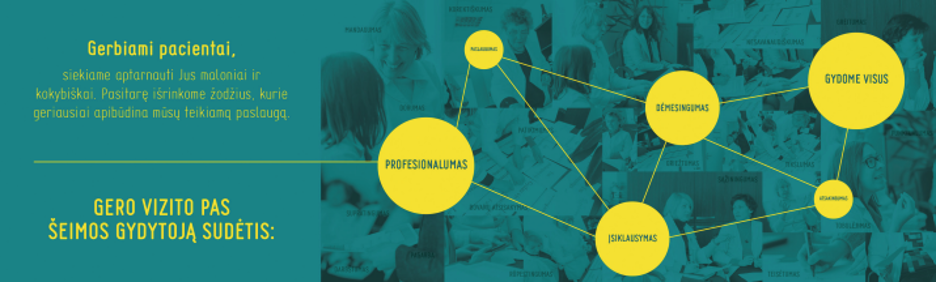
Picture 3. Lithuania, 2016. The design of calendars and visit slips, distributed to the patients by family doctors.

The Vitamin Lab (Vitaminų laboratorija)
The Vitamin Lab introduced a feedback-like mechanism in the Lazdynai outpatient clinic. The installation was designed to serve as a reminder, or a reference, to the clinic's openness and resolve to provide good-quality service and improve its treatment of the patients. In this way, it was meant to affect both the attitudes towards bribery and the bribing behavior of the patients. The idea of the Vitamin Lab came from the discussions held at the very first workshop with the personnel and patients. The workshop participants pointed to the lack of a meaningful feedback loop for patients to evaluate the services of the clinic. To address this issue, the intervention team decided to develop an installation in the entrance hall next to the patients' registry and further amplify the message (and presence) of this installation by strategically placing Vitamin Lab visuals in various locations throughout the clinic (e.g., the elevator, doors, TV monitors, etc.).
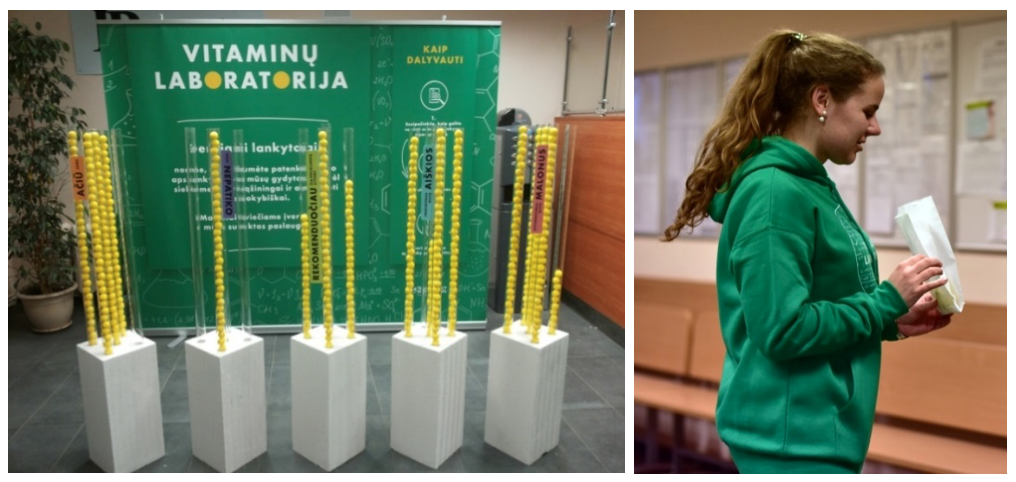
The entrance hall installation consisted of (1) the main stand named The Vitamin Lab, with the normative announcement by the clinic's administration; (2) a small stand next to it, with the instruction to the users how to take part in the installation; (3) another smaller stand with the instruction how to vote and offer feedback; (4) paper bags with five ping-pong-sized balls used for voting; (5) five see-through pillars with different labels (i.e. thank you, I would recommend this clinic to others, procedures were clear and service was pleasant; and I did not like it); and (6) a transparent plastic box for more personalized written feedback by the patients.
The installation stayed in the main hall for the entire two-month period of the entire intervention. It was used by the patients to offer feedback at least 3400 times, with at least 17054 "vitamins" distributed in the evaluation pillars. There were 199 comments left in the see-through feedback box. It is worthwhile to note that two-thirds of them (N = 122) were positive comments, and some 100 were thank-you letters to the medical personnel. All comments were depersonalized and submitted to the administration of the clinic.
To better understand the voting dynamics, the intervention team every one or two weeks experimented with the number and placement of categories, while offering the users the same five "vitamins" to evaluate their visit with. While the changes related to the categories did not significantly affect "vitamin" distribution patterns, they did lead to an increase in the number of written responses.
Picture 4Lithuania, 2016. The main entrance hall before and with the Vitamin Lab installation.
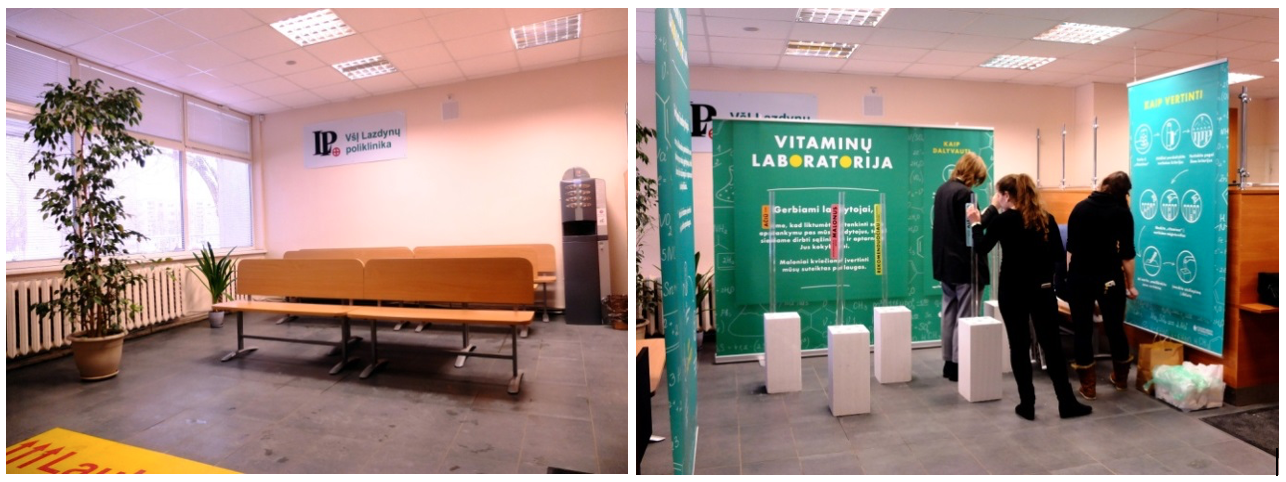
The patients participating in the Vitamin Lab were aided by some twenty Transparency International Lithuania volunteers, dressed in similarly styled Vitamin Lab hoodies. The volunteers were continuously present at the location and oversaw the distribution of the paper bags containing five "vitamins" to those willing to take part in the evaluation exercise.
Picture 5. Lithuania, 2016. The Vitamin Lab with the evaluation tubes. A volunteer with a bag of "vitamins".
The Intervention through the Lens of the Installation Theory
Deconstructing the Intervention
With the Lazdynai clinic intervention only partially achieving its goals, it may be beneficial to analyze the reasons behind this and explore what could have been done differently or improved when planning a similar intervention in the future. It can now be done with the benefit of new insights (Cislaghi & Heise, 2019; Lahlou, 2018; Yamin et al., 2019), complementing other established research (Lahlou, 2015; Michie et al., 2013). The Installation Theory (Lahlou, 2018) offers a framework to evaluate such interventions across the three physical, social, and psychological layers in a structured manner. The theory posits that behavior is shaped in a three-layered manner by "affordances of the environment; representations and practice embodied in actors; rules enforced by institutions" – with an installation being "a socially constructed system with such three layers which guides a specific activity, by suggesting, scaffolding and constraining what society members can/should do in a specific situation (Lahlou, 2011). The theory posits that sustainable behavior change is more likely to occur if an intervention seeks to strategically address and reshape determinants and affordances on all three levels simultaneously, with the behavior in focus tackled at the location where and at the time when it occurs (Lahlou, 2015). Determinants of human behavior can be found in the subject (for instance, in one's habits, beliefs, motives, etc.) and the context of behavior (for example, laws, institutions, colleagues, etc.), while affordances describe what can be conducted in or supported by a particular context (Ibid). To assemble data required to do so, the subjective evidence-based (SEBE) technique featuring research subjects wearing miniature cameras is used to evaluate the environment in which the intervention would take place and to map out key activities and determinants of behavior in question (Lahlou, 2017).
Due to the forensic (and exploratory) nature of the paper, we will diligently follow the analytical blueprint developed by Yamin et al. (2023) and offer a retrospective overview of the key determinants that were addressed by the Lazdynai Clinic intervention. We will first map out key determinants present in the Clinic in accordance with the three layers outlined above (Lahlou, 2018). We will then apply the framework of Yamin et al. (2023) and break down the key determinants (Cislaghi & Heise, 2018; Lahlou, 2018), modalities (Yamin et al., 2019), and behavioral change techniques (Michie et al., 2013) of the intervention. The figure below presents key determinants featured in the Lazdynai intervention.
Figure 1: Layers of the Lazdynai Clinic intervention
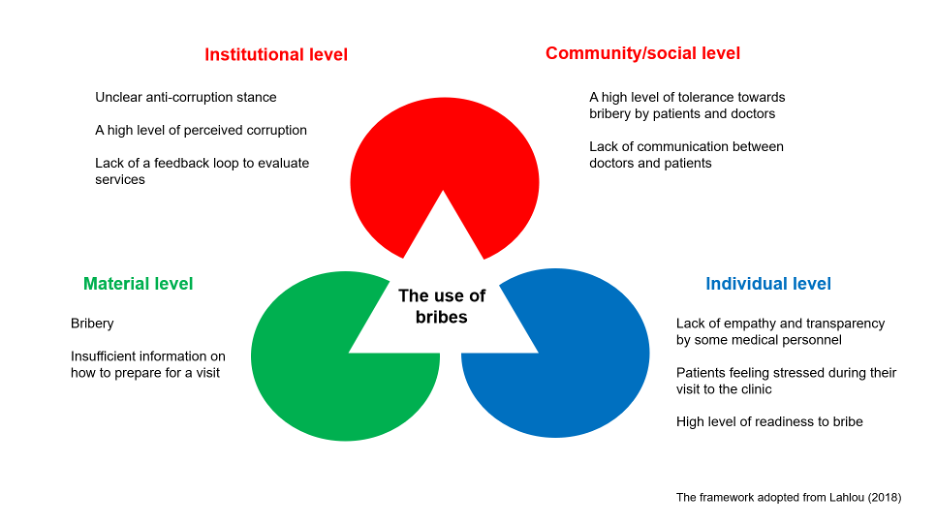
Note:
Material level:
Bribery
Insufficient information on how to prepare for a visit
Institutional level:
Unclear anti-corruption stance
A high level of perceived corruption
Lack of a feedback loop to evaluate services
Community/social level:
A high level of tolerance towards bribery by patients and doctors
Lack of communication between doctors and patients
Individual level:
Lack of empathy and transparency by some medical personnel
Patients feeling stressed during their visit to the clinic
High level of readiness to bribe
Let us now outline the determinants, modalities, and behavioral change techniques of the intervention in a more comprehensive manner, in Table 1.
Table 1: Domains and layers of determinants of the intervention
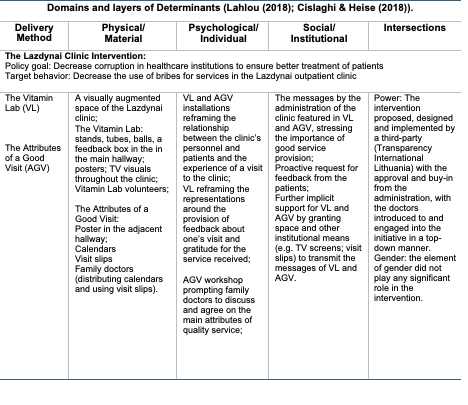
Table 2: Behavioral change techniques and modalities of the intervention
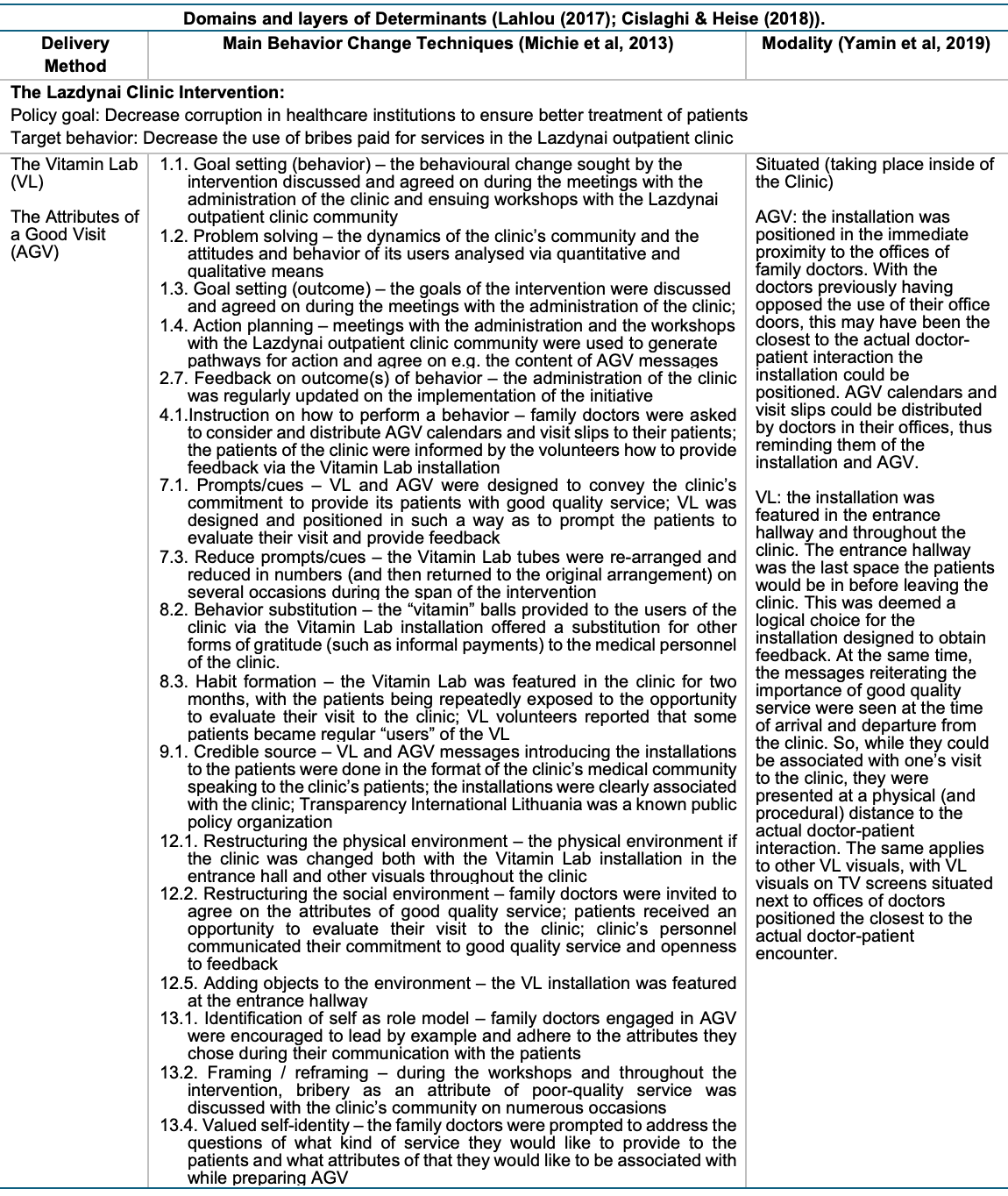
Behavioral and change model: The Social Design Approach
The Lazdynai intervention was designed following the social design approach, defined above. It approaches the transformation of institutions as an applied learning process aimed at redesigning systems and processes by enabling the members of those institutions to lead the process (Gutierrez & Jurow, 2016). While the approach was already tested in service provision and communal work (Chen et al., 2015), it was the first time it was used in the Lithuanian healthcare sector. It was also a first-of-its-kind engagement for Transparency International Lithuania.
Physical/Material Determinants
The Lazdynai Clinic intervention prominently featured various physical determinants in both VL and AGV installations. The Lazdynai clinic was turned into a social design laboratory, with the entrance, hallways, and other spaces inside the clinic physically altered with "The Vitamin Lab" installation, paper and TV screen visuals inviting to provide feedback; and posters, calendars, and visit slips acquainting the patients with "The Ingredients of a Good Visit" to a family doctor. These props shared one design meant to be easily identified as the same intervention by the visitors to the clinic. In addition to inanimate determinants, VL volunteers were present at the entrance next to the main VL installation, engaging with the patients, explaining the feedback process, and ensuring the running of the installation. The changes the installation brought to the interior of the clinic were unorthodox and had not been seen before in Vilnius and Lithuania.
The design, form, and style of VL had some elements of gamification. While this risked being seen as a less serious undertaking (and therefore taken more lightly) by the patients, it could have also eased the reception of the proposed activities around the sensitive topic of service quality by both patients and medical personnel. Yet, the VL installation, positioned at the entrance and next to the clinic's registration desk, according to VL volunteers, initially caused a stir and was greeted with cautiousness and distrust by the clinic's staff working at the registry. Its personnel reportedly was anxious about how much they would be observed and how much the VL installation would interfere with their regular activities. This concern subdued over time, with the staff in question clearly becoming accustomed to the presence of the VL installation.
The development of the installation on the floor with family doctors showed the boundaries within the clinic's medical community, with the doors to doctors' offices indicated as off-limits for any kind of activities. The family doctors initially spurned a proposal to use the doors as message boards to personalize their relationship with patients. Interestingly, as the intervention went on and the doctors became more accustomed to and engaged in the process, they appeared to become more open to the idea of using their office doors for the purposes of the intervention, and with some of them actively proposing to do so. This, however, was not possible, with the AGV installation already in full development mode.
Psychological / Individual Determinants
The VL installation reinterpreted how users' feedback can be provided, particularly in sensitive contexts. The playful nature and interactive (and gamified) design of VL offered an instant evaluation process, easy to engage with and conduct. VL turned a previously by-and-large absent feedback loop into a major theme of the visit to the clinic via the central positioning of the VL voting tubes, the "vitamin" balls used for voting being visible in the tubes to the visitors of the clinic, and VL volunteers proactively offering to evaluate one's visit and patients reminded of the opportunity to express their opinion via VL visuals throughout the clinic.
VL feedback process also offered a new meaning to several objects, which otherwise must have been familiar to the patients through their primary use in daily life. For example, a white paper bag often used for sandwiches, featuring five yellow-colored ping-pong-like balls, became a voting toolkit. The plastic see-through tubes and their plaster bases turned from construction material into public polling props. The patients could leave (and some three hundred of them did) written feedback into a stylized see-through plastic feedback box, smaller in size but similar to ballot boxes used during elections, thus arguably implicitly reminding the patients of the importance and relevance of the procedure.
The name "Vitamin Lab" also had an important role. The term "vitamin" was purposefully used to allude to the positive and constructive nature of the evaluation exercise. Providing feedback was presented as an exercise that was meant to improve the clinic's service quality and the doctor-patient relationship. By distributing "vitamin" balls to evaluate their treatment, the patients therefore were strengthening the resilience of the clinic. The VL installation also differed starkly from the process of leaving feedback prevalent in healthcare establishments at the time, which usually consisted of a notebook that was viewed as a book for complaints, meant to leave critical comments about medical personnel in.
The AGV installation was directed at both the medical personnel and patients of the clinic. The AGV norm-setting workshop exercise allowed the family doctors (for the first time) to discuss and agree on how they understood good quality service and their professional relationship with the patients. While it may have served as a building block for further conversations with the entire clinic's community, the public presentation of the results served another important purpose. The reiteration of the importance of good service provision and description of what it meant was meant to transmit the clinic's norms, to create a more assuring environment for the patients, and to offer behavioral guidelines for the interaction with the doctors. All of this combined was expected to contribute to greater empowerment of the patients and their more even-footed communication with the medical professionals, an issue highlighted during the initial workshop with the clinic's community.
The name "Attributes of a Good Visit", if translated verbatim from the original Lithuanian title "Gero vizito sudėtis", means "the contents of a good visit". This connects it to the Vitamin Lab and alludes to the ingredients of what good service provision should be. The fact that this information was offered in the immediate vicinity of family doctor offices was meant to remind the patients of what they should expect and ask of their family doctors, with the feedback loop present to express their opinion about the visit afterwards.
Social / Institutional Determinants
Social and institutional determinants – in terms of both formal and informal rules – were featured prominently in the intervention. VL and AGV installations sought to reinforce the application of existing laws (prohibiting to bribe) through the introduction of new guidelines for patients and the establishment of informal agreements regarding medical personnel's behavior and treatment of patients. While focusing on facilitation of feedback and communication, their stance on service quality, the administration of the clinic, in partnership with Transparency International Lithuania, sought to assess and lower the levels of bribery in the clinic. The VL installation appears to have offered may have offered (at least, partially) a substitute for bribes, with four out of five VL feedback options featuring positive messages. By participating in VL or simply seeing featured feedback results, the patients may well have interpreted this as a signal that such expression of gratitude would suffice.
The clinic's administration was aware and supportive of the intervention but treated it with caution. The anti-corruption goals of the intervention were communicated and agreed on from the onset of the initiative. This was clearly a sensitive issue that could have been easily boycotted or pushed back on by the medical staff, if not the patients. The presence of Transparency International Lithuania, an anti-corruption public policy organization, alone suggested (at least to the medical personnel) that the intervention was somehow related to corruption prevention and anti-corruption education. The intervention offered a novel pathway to curb bribery by addressing the issue indirectly, by emphasizing professionalism and openness of the medical staff, on the one hand, and readiness to engage and receive feedback and gratitude through other institutionalized means, on the other.
Intersections: Power and Gender
The collaboration between the clinic's staff and TI Lithuania-led intervention team may have created odd dynamics and stirred everyday routines in the clinic. It was clearly unusual for the clinic's personnel to have a third party, which was neither staff nor patients, present on the premises of the healthcare institution. Just as mentioned above, for example, the staff at the registration desk needed some time to adjust to the neighboring presence of the Vitamin Lab and its volunteers. The presence of the intervention team on the grounds of the clinic and the two installations may well have been seen as a threat to the status quo by at least some other clinic's staff. For instance, the medical personnel were also rather cautious while engaging with the intervention team and participating in the activities of the intervention. It may well have been the case that many of the clinic's representatives took part in the workshops following the orders of the administration and tolerated the social design changes made to the clinic as a necessary "evil" or discomfort they had to tolerate for some time.
The level of buy-in of the administration into the proposed activities was also unclear, with its representatives seemingly navigating between their commitment to facilitate the implementation of the intervention and the desire not to upset the employees of the clinic. This subsequently may have affected the perception of the initiative and the need to take part therein by the clinic's personnel. For instance, at the end of the intervention, the clinic's administration asked not to go ahead with its qualitative assessment by the family doctors, citing their lack of time during the virus season and stress to be incurred, among other reasons.
The visitors of the clinic were highly unlikely to notice or be exposed to the power dynamics described above. Both installations are likely to have been regarded as initiatives led by the Lazdynai clinic – with a relatively small logo of Transparency International Lithuania featured only on the main stand of the Vitamin Lab installation. VL and AGV featured messages addressed to the patients on behalf of the clinic; visit slips and calendars were distributed by the clinic's personnel, all of which should have further enhanced the association of the intervention with the clinic. The volunteers wore stylized hoodies, which explicitly associated them with VL.
Both installations were aimed at improving patient-doctor power dynamics by empowering the patients and reminding the medical personnel of their responsibility to provide good service. It appears that a more caring approach exhibited by the doctors was well received by the patients.
Gender-related issues did not play any significant role during the implementation of the initiative.
Overview of the Determinants
Let us now map out the layers of the determinants of the Lazdynai Clinic intervention, with the Installation Theory framework offering a systemic approach to analyze separate layers and mechanisms at play.
Figure 2: Overview of Determinants
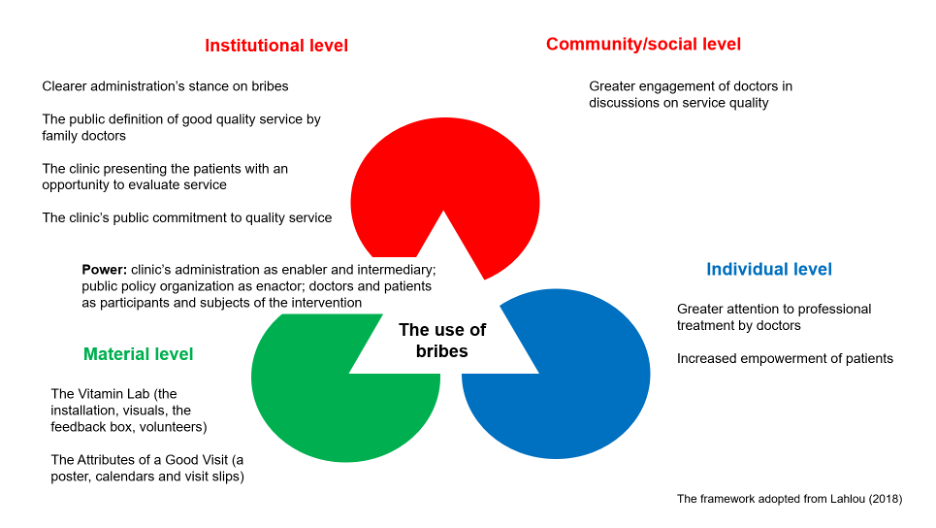
Note:
Triangle: The use of bribes
Material level:
The Vitamin Lab (the installation, visuals, the feedback box, volunteers)
The Attributes of a Good Visit (a poster, calendars, and visit slips)
Institutional level:
Clearer administration's stance on bribes
The clinic presenting the patients with an opportunity to evaluate the service
The clinic's public commitment to quality service
The public definition of good quality service by family doctors
Community/social level:
Greater engagement of doctors in discussions on service quality
Individual level:
Greater attention to professional treatment by doctors
Increased empowerment of patients
Power: clinic's administration as enabler and intermediary; public policy organization as enactor; doctors and patients as participants and subjects of the intervention
Discussion
The Installation Theory offers a useful framework to analyze what was done across various layers of the intervention. It also provides us with the means to evaluate what may have been considered and done additionally or differently, while planning and implementing it. The intervention produces some promising, yet mixed, results. In hindsight, it could have benefited from a sound, more detailed, and behaviorally based theory of change, complementing the deployed social design approach. This, in turn, may have allowed for a more cohesive planning and its successful implementation and prompted a more realistic set of expectations related to it. Indeed, while the focus on service provision may have offered a constructive pathway for action, considering the difficult environment in which the intervention took place, it may have been too optimistic to expect a step change in bribery practices in the clinic. Similarly, the limited exposure of patients to VL and AGV while visiting the clinic and its clear association with the Lazdynai clinic was likely insufficient to change patients' readiness to bribe. At the time of the intervention, bribery was widespread in other institutions, such as the police, too (Lithuania, 2016). The patients were also exposed to other social influences.
A key feature of the Lazdynai clinic intervention is that, unlike, for instance, the civic culture initiatives of Antanas Mockus (Yamin, 2013), it took place inside of one concrete institution, within a well-defined space, and targeted members of a particular community. The Installation Theory encourages the introduction of changes aimed at influencing the behavior where and when it usually takes place (Lahlou, 2017), yet one could question how to establish optimal proximity of the intervention's determinants to their target audience and behavior and what is close enough, especially in sensitive contexts, when the issue addressed is either censored by or are a taboo for the target group, i.e. medical personnel.
Following the family doctors' refusal to let their office doors be used for the intervention, an alternative route was taken to deploy the walls in the immediate vicinity of their offices, with their personal engagement encouraged through the distribution of visit slips and calendars. Clearly, the recalibrated approach and the use of a large noticeable poster, in immediate proximity to the offices, were also effective measures to transmit the normative messaging of the installation that led to a reported behavioral change among the patients. While a more thorough discussion may have appeased the doctors' concerns and would have secured the door space to be used, this would have required an effort which could have easily backfired. Given the initial cautiousness exhibited by the doctors, the overt emphasis on the presence of the determinants in this off-limits space may not only have triggered resistance and caused sabotage of the proposed action but may have been insensitive to the context and not sustainable. The fact that the doctors were not pressured to use their doors appears to have been the right choice, which both eased the tensions and arguably created greater trust. After all, some of the doctors indicated their changed view on that point as the intervention progressed.
In this sense, AGV could be seen not as a retreat but a timely adjustment to and calibration with the needs of the clinic's community. Indeed, the design of the installation provided a pivot to a community discussion about what defined good service for the collective of family doctors, thus creating an opportunity for the entire group to discuss this issue in earnest for the first time and laying the ground for future conversations on the matter. The subsequent public presentation of the results of the discussion via the AGV installation further solidified this normative position within the clinic's community. Meanwhile, a more personalized message attributed to each doctor on their office doors, on the other hand, would not have produced that result, thus skipping a more collective step forward. This is also where the intervention may have benefited from a more elaborate theory of change and greater resources at hand: for instance, personalized messages on the doors or AGV messages inside of family doctors' offices could be the next step in increasing the proximity of the intervention to the actual patient-doctor interaction.
There may be several reasons why AGV only affected the patients' belief that in-kind bribes are less needed to ensure proper medical treatment, and reduced only their reported bribing in-kind. On the one hand, the fact that beliefs and behavior related to cash bribes remained unchanged could mean that the installation was only partially effective. On the other hand, the shift in beliefs regarding the effectiveness of and behavior of giving in-kind bribes could point to the targeted effectiveness of the AGV installation and the way it was interpreted by the patients. Interactions with family doctors were more often associated with informal gifts such as chocolate, sweets, and alcohol than with informal cash payments. Since AGV was positioned in direct proximity to family doctors, it may well be that the patients contextualized its normative messaging, amended their beliefs, and started behaving accordingly.
When analyzing VL's purpose and placement in the clinic through the prism of the Installation Theory, one could argue that it may have been more beneficial to have feedback present by medical offices or in closer proximity to them. However, it would have required greater involvement of the clinic's medical community and would be unattainable due to budgetary limitations of the initiative, to mention just some constraints. At the same time, the invitation to provide feedback was streamlined through the patients' visit to the clinic via visual reminders in busy locations of the clinic, such as the elevator, and in relatively close proximity to doctors' offices via TV screen visuals. The fact that patients participated in the VL at the end of their visit to the clinic may also play an important role. In any case, the VL normative messaging may have been either too far removed, physically or temporally, to convert beliefs into the actual behavior.
In retrospect, as seen from the analysis above, the intervention did feature many determinants that addressed physical, social, and psychological layers of the Lazdynai outpatient clinic. What is nonetheless clear is that the use of the Installation Theory framework would have provided the intervention team with the dioptric to launch VL and AGV in a more nuanced and systemic manner. A more detailed breakdown of the domains and layers of the determinants arguably would have allowed for a more holistic and more measured assessment of the inventory of behaviors at display and on target, and tools and techniques needed and at disposal to address them. This, in turn, would have allowed for the development of a more cohesive strategy and tactics while dealing with the clinic's personnel.
For instance, the intervention was marked by a continuous search for a compromise and adjustment to the changing environment in the clinic. The careful stance of the administration has already been mentioned. The clinic's administrative brass evidently viewed the intervention as a balancing act between the collaboration with Transparency International Lithuania and maintaining a productive relationship with the medical staff. Such an administrative position was likely sensed by the clinic's personnel and may have contributed to initial cautiousness in regard to and resistance to the intervention. Complex group dynamics and a potential lack of interpersonal communication between the clinic's personnel continuously risked sabotaging the intervention's activities. Meanwhile, the role of and the support for the intervention by the administration may have been made more pronounced, and the social layer of the intervention was enhanced by engaging and featuring the brass of the clinic in the intervention in a greater manner. For instance, VL messages may have been further personalized by featuring short video addresses by the head of the clinic and other medical staff. This, however, would have required additional resources and would have been contingent on the clinic's personnel agreeing to participate in such an undertaking.
When it comes to the interventions' goals, it may also have been unrealistic to expect a shift in patients' readiness to give bribes to doctors. A visit to the clinic represented only a small part of daily interactions and involved a specific context in a concrete institution, while readiness to bribe may have reflected an overall mindset in relation to the interaction with public sector providers.
On a more positive note, the intervention may have contributed to the improvement of the medical personnel's morale. Reportedly, during the initiative, the doctors started to dress better for work (e.g., male staff members started wearing suits more often). The clinic's community also organized its first joint trip together.
The duration and continuity of the intervention also require further discussion. While there was a shift in the patients' perception of a need to give bribes and a shift in reported bribing in-kind by AGV users upon the completion of the intervention, the reported practice of bribing with cash and readiness to engage in bribery remained the same. This prompts several questions. Would a longer-lasting intervention have produced different results and after what time? Should the change in behavior have been measured in a different, more sensitive manner?3 How could the issue of readiness to make a bribe have been addressed – and can this personal norm be influenced through an installation in a healthcare establishment alone? Finally, how to ensure sustainability and help develop a sense of community ownership of interventions initially designed and driven by third parties? In hindsight, one of the main shortcomings of the intervention was that it did not necessarily seek to develop installations that could be sustainably integrated into the clinic's environment and maintained without external support.
Indeed, a more well-thought-out strategic approach could have also ensured greater sustainability of the clinic's good service agenda upon the completion of the intervention. The clinic did not continue with the Vitamin Lab installation on the grounds that it was too difficult to maintain, but kept the AGV poster on display. It was not clear whether the clinic's administration was prepared to invest anything but minimal resources in developing or maintaining such installations, either. The lesson here could be that it is important to be conscious of (1) the level of commitment and (human and financial) resources available and needed to maintain such installations, (2) the level of their acceptance by the clinic's community and, possibly, (3) other simpler kinds of related activities or elements of the intervention an organization can commit to and maintain by itself. For instance, it could have been suggested to the Lazdynai clinic to continue with the practice of asking for feedback with the help of only a see-through feedback box featured in the Vitamin Lab or collect feedback in another manner, for instance, via thank-you cards, in a designated place. Such trimmed-down approach would also offer a tangible way for the clinic to move forward, one step at a time.
Conclusion
The Lazdynai clinic field intervention offers mixed results and a case study to draw from when designing similar interventions in the future. It also invites a discussion on how to create sustainable anti-corruption change in the future and the effectiveness of current methods used to do so. When seeking tangible and sustainable change, it may be beneficial to consider the complex interplay of interests, determinants, and affordances usually featured in institutions exposed or prone to corruption risks. The Installation Theory offers a useful analytical framework to do so.
Acknowledgements
The author would like to express his sincere gratitude to Paulius Yamin, PhD, for his continuous support and valuable advice while preparing this manuscript, and to Ingrida Kalinauskienė and Rūta Žiliukaitė, PhD, for their insightful comments.
- The Transparency International Lithuania team consisted of several TI Lithuania employees and volunteers, Rūta Žiliukaitė of Vilnius University and social designers Dovilė Gaižauskienė and Jurga Želvytė of Vilnius College of Design.↩
- The Lazdynai outpatient clinic intervention discussed in this study was conducted as a part of the European Union-funded ANTICORRP project (Anticorruption Policies Revisited: Global Trends and European Responses to the Challenges of Corruption; Grant agreement ID: 290529), by Transparency International Lithuania, a public policy organization in the field of anti-corruption and transparency.↩
- Prior and after the intervention, the patients were asked whether they had made an informal payment over the span of twelve months. With the intervention running for two months, it could be argued that the patients should have then been asked about their experience of making informal payments in that period time, with the same kind of question asked before the intervention took place.↩