
Introduction
Although it forms the substrate of the intangible and largely mysterious complex we call the mind, the brain is part of the body. Brain activity allows us not only to perceive and recognize objects in the external world and to act upon them, but also, at the same time, to perceive and mentally represent that uniquely physical and psychic entity we call the "body in the brain" (Berlucchi & Aglioti, 1997, 2010; Fig. 1).
Figure 1 The Body in the brain
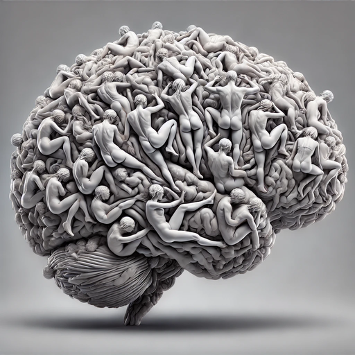
Design-like portray of the representational salience of the body in the brain (created using ChatGPT, https://chatgpt.com/ ).
One of the brain's fundamental functions is to generate and continuously update body representation–an internal model constructed through multisensory processes that encodes the body's position, shape, and configuration in space. This representation is not fixed but highly plastic, adapting dynamically to changes in sensory input, context, and experience. A well-established distinction in this domain is that between body schema and body image. The body schema is a pre-reflective, sensorimotor representation that supports posture, movement, and spatial coordination, operating largely outside conscious awareness. In contrast, the body image refers to the conscious and conceptual representation of the body, including its visual appearance, perceived size, and associated beliefs or attitudes. Although analytically distinct, these components are functionally integrated and continuously influenced by multisensory input. The plastic nature of corporeal representations is evident in a variety of phenomena, including bodily illusions (e.g., the rubber hand illusion) in healthy individuals (Botvinick & Cohen, 1998) and amputee (Aglioti, 1999) or spinal cord injured patients (Scandola et al., 2014; Scandola et al., 2014). The effect of using external objects and tools also hints at plastic remapping of bodily representations (Fourkas et al., 2008). Bodily self-consciousness (BSC), i.e., the experience of having a body that is situated in specific spatial positions, and being the agent of its actions, arises from the integration of proprioceptive, interoceptive, tactile, and visual signals, and is considered a foundational layer of self-awareness. Recent technological advances, particularly the immersive virtual reality (IVR), have opened unprecedented opportunities for the study of bodily self-consciousness. IVR enables the controlled manipulation of key parameters–such as the spatial location of the self in relation to the body and the sense of agency over bodily actions–that contribute to the so-called full-body ownership illusion (Ehrsson, 2007; Lenggenhager et al., 2007). Through these manipulations, it becomes possible to induce the illusion that a virtual body (i.e., avatar) is one's own. Research using IVR has demonstrated that individuals can experience a strong sense of ownership over virtual bodies that differ significantly from their own in terms of size, shape, age, gender, or even species. Remarkably, such embodiment illusion can unconsciously influence behaviors, attitudes, and physiological reactions in line with the characteristics of the adopted virtual body.
Thus, IVR may offer a powerful tool not only to investigate how body representations are constructed and updated, but also to explore how changes in these representations can affect the broader sense of self. Furthermore, as digital environments become increasingly integrated into everyday life, the body assumes a new centrality within the virtual domain–most notably in the emerging context of the metaverse. In these fully immersive digital worlds, the virtual body functions as a social interface, guiding how individuals interact, interpret others, and navigate interpersonal space. As in the physical world, we automatically process the visual and behavioral cues of others' avatars, inferring social information about them, like for example, group membership, identity, and intentions. These cues influence our responses, including how we regulate physical proximity and define our peripersonal space. Importantly, having a body–even a virtual one–in a socially shared environment introduces psychological vulnerabilities. In the metaverse, as in the physical world, users can experience threats to bodily integrity–such as harassment or virtual assaults–that may lead to tangible emotional and psychological consequences.
Bodies in the brain
Understanding whether and how the brain processes body-specific information is essential for uncovering the mechanisms underlying corporeal representations. In this context, functional neuroanatomy studies have identified a network of brain regions that are preferentially involved in the perception and processing of the human body. These regions appear to be, at least in part, functionally specialized, responding selectively to bodily stimuli as opposed to non-body objects. A key example is the extrastriate body area (EBA), located in the lateral occipitotemporal cortex, which shows robust activation during the visual analysis of human bodies and body parts (Downing et al., 2001). Causal evidence for the role of this region comes from studies using inhibitory stimulation in healthy individuals, which have shown that temporary disruption of EBA function impairs the recognition of body-related stimuli (Urgesi et al., 2004). Importantly, body-selective areas do not respond to facial stimuli, which are instead processed by a distinct region in the ventral temporal cortex–the fusiform face area (FFA). Evidence from lesion studies further supports this domain-specific organization: damage to the fusiform gyrus can lead to prosopagnosia, a condition characterized by the inability to recognize familiar faces while leaving the recognition of non-body objects largely intact (Moro et al., 2008). This functional dissociation highlights the evolutionary significance of face processing, given the central role of facial cues in social communication and identity recognition. However, it is important to emphasize that the neural coding of the rest of the body is not limited to sensorimotor functions. Body morphology itself conveys meaningful information about both "demographic" attributes–such as gender, age, and ethnicity–and "social" traits, including attractiveness, physical fitness, and beauty (Aglioti et al., 2012). These features are especially salient in contexts where facial information is limited or unavailable, underscoring the body's communicative value in human interactions. Moreover, the neural representation of the body plays a crucial role in maintaining a coherent sense of bodily identity, even as the body undergoes continuous change through movement and interaction with the environment. Neuropsychological studies have shown that damage to specific brain regions can lead to selective disorders of body perception and representation, such as autotopoagnosia or somatoparaphrenia, further demonstrating that the body is not merely a physical structure, but a central component of the self (Moro et al., 2008).
Building and maintaining bodily representations
The brain continuously builds and updates internal models of the body–referred to as body representation–which support both action and perception by tracking the body's shape, position, and movement. This overarching construct is commonly divided into two partially overlapping but functionally distinct components: the body schema and the body image (Vignemont, 2010; Gallagher, 2006). The body schema refers to an automatic, dynamic, and largely unconscious sensorimotor map of the body, which allows for the execution of movements and the coordination of posture in space. It is informed by proprioceptive, tactile, and vestibular signals and is constantly updated in real time. For example, when reaching for a glass without looking directly at one's arm, the body schema enables accurate movement by providing an internal estimate of limb position. In contrast, the body image involves the conscious perceptual and conceptual aspects of the body, including its visual appearance, size, and semantic attributes. It also includes beliefs, attitudes, and emotional evaluations related to the body. For instance, recognizing oneself in a mirror or evaluating whether one's body is attractive are processes linked to the body image. Although these two constructs serve different functions, they are deeply interconnected and rely on the integration of multiple sensory inputs. The construction of bodily representations, therefore, depends not only on the sensory systems through which we perceive the external world–such as vision, hearing, and smell–but more fundamentally on somatosensory inputs that provide direct information about the body itself. These include tactile receptors that signal contact with objects or other bodies, proprioceptive receptors that inform us about movement and the relative position of body parts, and vestibular receptors that monitor balance, orientation, and motion in space (Blanke et al., 2015). Crucially, this flow of information is processed largely outside of conscious awareness, allowing the brain to maintain a coherent and continuous sense of the body as a unified entity–one that is both situated in space and intimately linked to the self. Importantly, bodily representations are not shaped solely by real-time sensory input. They are also modulated by higher-order cognitive and affective factors, including past experiences, memory (Ianì, 2019), beliefs, attitudes, and culturally mediated ideals. These elements interact with bottom-up signals to produce a representation of the body that is both perceptual and conceptual, and that becomes integrated into one's broader self-concept (Avenanti et al., 2005; Maister et al., 2015). For example, cultural norms that idealize extreme thinness can lead to distorted body images, as observed in individuals with anorexia nervosa. In such cases, visual and interoceptive information about the body is overridden or reinterpreted in ways that sustain pathological misperceptions (Fusco et al., 2023; Provenzano et al., 2024). Moreover, bodily awareness extends beyond the external morphology of the body. Individuals report internal sensations such as visceral tension, fullness, heartbeat, or fluctuations in body temperature–phenomena that reflect the contribution of interoception to the construction of bodily experience. Although the representation of the body is often considered a relatively stable and enduring mental construct, a range of phenomena clearly illustrates its dynamic and malleable nature: it can change in response to sensory experiences, bodily changes, and even simple experimental manipulations. In other words, the brain's map of the body can be rapidly updated or even distorted by incongruent multisensory signals or perceptual illusions, without requiring any structural brain alterations. One of the most compelling lines of evidence for the plasticity of bodily representations comes from studies on bodily illusions. These phenomena demonstrate how easily the brain can be misled about the position, size, or even existence of parts of the body. For example, applying vibration to the biceps tendon at a specific frequency can produce a strong illusion of forearm extension, even though no actual movement occurs. When this stimulation is combined with touching one's nose, subjects may report that the nose is growing longer–a phenomenon known as the Pinocchio effect or phantom nose (Ramachandran & Hirstein, 1997). Similarly, vibrating the tendons of the wrist flexors or extensors while the hands rest on the hips can produce illusory sensations of the waist expanding or contracting (Fusco et al., 2021; Goodwin et al., 1972; Tidoni et al., 2015).
Among non-visual illusions, one of the most striking was already described by Aristotle and has since been termed Aristotle's illusion. When a small object is touched between crossed fingers, it is perceived as two separate objects because the unusual finger positioning disrupts the brain's typical spatial mapping, leading to a misinterpretation of tactile input. A variation, known as the reverse Aristotle illusion, occurs when two distinct objects touched between crossed fingers are experienced as a single one (Bufalari et al., 2014). In both cases, the brain's confusion arises from the uncommon posture of the fingers, which conflicts with prior sensorimotor experience and typical somatosensory expectations. These effects underscore the role of context, prior experience, and cognitive expectations in shaping bodily perception, and suggest that even brief manipulations of sensory input can override representations that have developed over years of experience. Direct neural evidence for the brain's susceptibility to such illusions comes from electroencephalography studies showing that these tactile illusions produce temporally and spatially distinct patterns of brain activity. Early activation is observed in the somatosensory cortices, which are misled by the illusory perception, while later activation in the superior parietal cortices appears to serve a corrective function–reconciling the sensory conflict and recoding tactile input from somatotopic to spatiotopic coordinates (Bufalari et al., 2014). Perhaps the most widely studied multisensory illusion is the rubber hand illusion. In this paradigm, individuals observe a rubber hand being stroked in synchrony with their own unseen hand. Over time, the sensation of touch shifts from the real hand to the rubber hand, creating the compelling feeling that the artificial hand belongs to them (Botvinick & Cohen, 1998). This demonstrates the brain's ability to incorporate external objects into its body schema through multisensory integration and shows that ownership of body parts is not a fixed property, but rather the result of dynamic perceptual processes. This ability to incorporate external elements into one's bodily representation is not limited to artificial hands in controlled experimental settings. Although extracorporeal tools are typically perceived as distinct from the body, extended and functionally relevant use can lead to their partial incorporation into the body schema, blurring the boundary between body and object. For instance, individuals who wear glasses for prolonged periods often report adjusting them even when they are not being worn, as if they remained part of the body. Blind individuals frequently experience their cane as an extension of their body while navigating the environment, and athletes often describe a strong sense of unity between their body and their equipment, such as a tennis racket. These examples underscore the remarkable plasticity of the body schema in incorporating functionally relevant external tools. A particularly compelling case demonstrating how objects long associated with the body can become incorporated into its representation–and even disowned along with it–is provided by the clinical observation of the "lady of the rings", a woman who, following a lesion to her right hemisphere, presented complete paralysis of her left limbs. Despite being cognitively intact, she denied that her left hand belonged to her and disowned the two rings she had worn on that hand for over thirty years. Interestingly, when the rings were removed from the paralyzed hand and placed on the unaffected one, she was able to recognize them as her own and recall autobiographical details associated with them (Aglioti et al., 1996). This case illustrates how the loss of body ownership can extend to familiar objects, suggesting that long-term associations between body parts and external objects may lead to their incorporation into the body schema. A possible neural mechanism supporting this phenomenon has been identified in the parietal cortex of monkeys. Neurons in this area respond to both tactile and visual stimuli presented in the peripersonal space around the hand. When the monkey uses a tool–such as a stick to reach for food–these bimodal visuo-tactile neurons expand their receptive fields to include the space around the tool (Iriki et al., 1996; Maravita & Iriki, 2004). These findings suggest that the body represented in the brain is not limited to the physical body but can flexibly extend to include external objects that are behaviorally relevant and consistently associated with specific body parts.
Further support for the plastic and constructed nature of bodily representations comes from the phenomenon of the phantom limb. Many individuals who have undergone amputation continue to experience vivid sensations in the missing limb–often to the extent that they attempt to use it to grasp objects or walk. In numerous cases, this is accompanied by intense phantom limb pain, frequently described as originating from anatomically plausible postures, such as clenched fingers or nails digging into the palm. Simple yet powerful experiments have shown how vision can modulate these sensations. In mirror therapy, for example, an individual with an amputated right hand is instructed to view their intact left hand in a mirror, positioned to create the illusion of the right hand. Moving the intact hand while observing its reflection can produce a sense of movement in the phantom limb and alleviate associated pain (Foell et al., 2014). This suggests that visual feedback can modify not only pain perception but also the very structure of body representation–even when the physical body part no longer exists. These findings imply that bodily representations are not solely sustained by inputs from the body but can also be maintained–or even generated–by external sensory cues. Some theorists argue that the physical body may not be necessary for the perception of having one (Berlucchi & Aglioti, 1997). This is particularly evident in the most extreme cases of phantom limb sensation, where individuals born without limbs report experiencing phantom limbs. Such cases suggest that the brain contains an innate body model, organized through a genetically preconfigured neural network known as the neuromatrix. This network involves key areas such as the somatosensory cortices, the posterior parietal cortex, and the cingulate cortex (Melzack, 2005). Notably, stimulation of the parietal cortex has also been shown to induce out-of-body experiences, in which individuals perceive themselves from an external perspective–highlighting the role of this region in constructing bodily self-consciousness (Blanke, 2012).
Taken together, these diverse phenomena–ranging from tactile and visual illusions to phantom limb experiences–provide converging evidence that the brain's representation of the body is not a passive reflection of sensory input but an active, flexible construction. These representations emerge through the integration of multiple sensory modalities and are shaped by both bottom-up input and top-down expectations, beliefs, and prior experiences. The brain constantly updates its model of the body in response to incoming information, suggesting that the sense of bodily self is grounded in a dynamic interplay between sensation, cognition, and context. This has profound theoretical and clinical implications, particularly for understanding conditions in which body representation becomes distorted or pathological. Furthermore, these findings set the stage for understanding how such representations contribute to the deeper, more subjective experience of being embodied–what is known as bodily self-consciousness.
Bodily self-consciousness
The term bodily self-consciousness refers to the experience of being aware of one's own body as a distinct entity in space. It involves a complex array of sensations, feelings, and bodily memories related to the body's position, movement, and appearance. While it is grounded in the brain's representation of the body, bodily self-consciousness goes beyond it by encompassing four core dimensions: the sense of self-location (knowing where one is in space), the first-person perspective (experiencing the world from within the body), the sense of ownership (feeling that the body belongs to oneself; Blanke, 2012; Blanke & Metzinger, 2009) and the sense of agency (experiencing oneself as the initiator of one's own actions; Haggard, 2017; Villa et al., 2022). Neuropsychological evidence shows that these components can be selectively disrupted following brain damage. Lesions to the right hemisphere, for example, can produce profound disturbances in bodily self-awareness. Some patients with left-side hemiplegia may deny their motor impairment (anosognosia) or even disown their paralyzed limb (asomatognosia), claiming it belongs to someone else or is no longer part of their body (Levine et al., 1991). In extreme cases, individuals report the presence of a supernumerary limb, describing its position and potential movements as if it were real, despite full paralysis. These phenomena are not due to global cognitive deficits, but rather to specific alterations in the neural circuits responsible for integrating multisensory and representational information about the body. Experimental studies in healthy individuals have demonstrated that key aspects of bodily self-consciousness can be temporarily modified through controlled manipulations of sensory input. In a seminal study, Lenggenhager et al. (2007) used a head-mounted display–a wearable device that delivers visual input from an external camera–to present participants with a real-time video of their own back, filmed from behind. When tactile stimulation applied to the participant's real back was synchronized with the visual input of the virtual back being stroked, individuals reported a shift in self-location toward the virtual body and an identification with it. This phenomenon, known as the full-body illusion, arises from the integration of congruent sensory signals and involves the entire body of another person as the object of identification. A related phenomenon, occurring at a more localized level, is the enfacement illusion (Sforza et al., 2010). Participants see another person's face being stroked while receiving synchronized tactile stimulation on their own. This visuo-tactile congruence leads them to incorporate features of the other face into their own self-representation, experiencing a sense of ownership over the observed face. The illusion shows that even self-face recognition–typically considered stable and self-defining–can be temporarily altered through multisensory integration, revealing the malleable nature of bodily self-consciousness. While exteroceptive cues–such as vision and touch–play a central role in the construction of bodily self-consciousness, an equally important contribution comes from interoception, the sense of the body's internal physiological states, including heartbeat, respiration, and visceral sensations. According to prominent theoretical models, interoceptive processing provides a foundational layer for the embodied self by grounding self-awareness in the continuous monitoring of internal bodily signals (Craig, 2002). Notably, individuals with lower interoceptive accuracy tend to be more susceptible to body ownership illusions, a finding that suggests a relationship between the precision of internal bodily signals and the stability of bodily self-consciousness (Tajadura-Jiménez & Tsakiris, 2014; Tsakiris et al., 2011). Together, these clinical and experimental findings suggest that bodily self-consciousness is not fixed but shaped by the ongoing integration of internal and external bodily signals–playing a crucial role in how we perceive ourselves and relate to the world.
Bodily Self-Consciousness in Immersive Virtual Reality
Experimental manipulations described above have revealed the plasticity of bodily self-consciousness, but often lacked ecological validity. Immersive virtual reality (IVR) offers a turning point, enabling its study in more naturalistic and interactive settings. IVR refers to a computer-generated, three-dimensional environment that updates in real time according to the user's head movements and orientation (Sutherland, 1965). Immersive systems typically rely on head-mounted displays (HMDs), which deliver stereoscopic visual input by rendering separate images for each eye. These displays are enclosed in frames that block out real-world distractions and, combined with head-tracking technology, allow the virtual perspective to dynamically follow the user's movements. This setup enables a more natural and sensorimotor-contingent interaction with the virtual environment, enhancing what is technically defined as immersion–that is, the system's capacity to engage multiple sensory modalities in a coherent, interactive experience (Banakou et al., 2018). From the user's perspective, immersion gives rise to the sense of presence, or the feeling of "being there" in the virtual world (Slater, 2009). This experience is shaped by two core components: place illusion–the sensation of physically being located in the virtual environment–and plausibility illusion–the subjective credibility of the events or scenarios presented (Slater, 2009). When both illusions are strong, users tend to respond to virtual stimuli in ways that mirror real-world behavior, even when they are fully aware that the environment is simulated (Slater et al., 2022). IVR has proven fundamental in the study of bodily self-consciousness, as it allows researchers to experimentally manipulate its core components, including ownership, agency, and self-location.
A central factor in eliciting the illusion of embodiment in virtual environments is the use of a first-person perspective (1PP), in which participants see the virtual body from the same spatial viewpoint they would have of their own. This visuo-proprioceptive congruence is often sufficient to induce a basic sense of ownership over the avatar (Maselli & Slater, 2013). The strength of the embodiment illusion can be further enhanced by introducing visuo-tactile or visuo-motor synchrony. In typical setups, participants see the virtual body being touched or moving in perfect temporal alignment with tactile stimulation or movements applied to their own real body. This has been shown to reinforce both the sense of ownership and agency (Banakou et al., 2013; Banakou & Slater, 2014). These findings further support the idea that bodily self-consciousness is highly plastic and shaped by the brain's interpretation of congruent multisensory input, rather than by visual similarity alone. While most studies have focused on exteroceptive cues such as vision and touch, recent work has demonstrated that interoceptive signals–such as heartbeat and respiration–also play a critical role in shaping virtual embodiment. In a seminal study, Suzuki and colleagues (Suzuki et al., 2013) adapted the rubber hand illusion to IVR by introducing cardio-visual feedback: participants saw a virtual hand pulsing in synchrony or asynchrony with their real heartbeat. Synchronous pulsing significantly enhanced both explicit and implicit ownership of the virtual hand. A follow-up study showed that this illusion could be weakened through vagus nerve stimulation, suggesting that interoceptive pathways actively contribute to the regulation of bodily awareness (Vabba et al., 2025). Cardio-visual feedback has also been extended to full-body illusions. In a study by Aspell et al. (Aspell et al., 2013), participants viewed a silhouette of their own body flashing in synchrony with their heartbeat, which led to increased self-identification with the virtual body. This effect was corroborated by neurophysiological data: Heydrich et al. (2018) reported that synchronous heartbeat feedback enhanced late somatosensory evoked potentials, reflecting deeper integration of bodily signals at the neural level. Respiratory signals have also been explored in the context of bodily self-consciousness. For example, Adler et al. (Adler et al., 2014) developed a system in which the brightness of a virtual avatar corresponded to the participant's breathing rhythm. While this did not directly increase body ownership, it enhanced the perceived connection between the user's respiration and the virtual body. More recently, the so-called Embreathment Illusion has provided compelling evidence that breathing patterns can influence bodily self-awareness. In this paradigm, participants observed a virtual body that breathed in synchrony with their own respiration, inducing the sensation that their breath was being shared or transferred to the virtual body (Monti et al., 2020). This experience not only increased feelings of ownership and agency but also evoked a sense of shared bodily presence. Notably, the same effect was later replicated in women (Cantoni et al., 2024), suggesting that the illusion is robust and generalizable, and that it may have practical applications in clinical and therapeutic contexts–for example, to promote body awareness or emotional regulation through controlled breathing. Taken together, these findings demonstrate that IVR provides a powerful platform for investigating and modulating bodily self-consciousness. IVR enables the controlled induction of complex bodily illusions, offering unprecedented access to the mechanisms underlying the construction of the embodied self.
Proteus Effect: the transformative effects of full-body illusions in immersive virtual reality
Immersive virtual reality not only allows researchers to manipulate bodily self-consciousness, but also to explore if it can influence higher-order processes such as attitudes, behavior contingent upon the features attributed to the embodied avatars. This phenomenon is commonly referred to as the Proteus effect, a term introduced by Yee and Bailenson (2007, 2009) to describe the tendency of individuals to adjust their behavior according to the bodily characteristics of their avatars. In their early studies, the authors demonstrated that even minimal manipulations of avatar's characteristics–such as facial attractiveness or height–could significantly shape social behavior. Participants embodied in more attractive avatars engaged in greater self-disclosure and maintained reduced interpersonal distance, while those assigned taller avatars displayed increased confidence in negotiation tasks. These findings laid the groundwork for a growing body of research. For instance, some studies have reported reduced perceived exertion and increased grip strength when individuals are embodied in muscular avatars (Kocur et al., 2020), suggesting that the mere appearance of strength can enhance the subjective sense of power and capability. In a study by Lin et al. (Lin et al., 2021), participants moved less during physical tasks, as if the appearance of fit avatars led them to feel that less effort was required. However, this effect did not always translate into changes in perceived exertion–particularly when participants focused on executing specific motor routines, which may have diverted attention away from the avatar's visual features. Notably, this reduction in movement did not always coincide with a change in perceived exertion, especially when participants were asked to focus on the execution of specific motor routines, which may have drawn attention away from the visual properties of the avatar. Muscular avatars have also been associated with altered emotional and physiological responses. Participants not only overestimated their own physical abilities, but also showed reduced reactivity to threatening stimuli–suggesting a temporary sense of power and invulnerability (Frisanco et al., 2022). Age-related avatar transformations provide further compelling evidence of embodiment effects. Indeed, embodying an older avatar has been shown to influence both explicit and implicit attitudes toward aging. In one study, participants using older-looking avatars attributed more positive traits to elderly people compared to those using younger avatars (Yee & Bailenson, 2006), while others found a corresponding shift in implicit associations (Banakou et al., 2018). Beyond attitudes, these experiences can alter behavior: after embodying an aged avatar, participants walked more slowly, though the effect was transient and faded within the same task (Reinhard et al., 2020). Conversely, embodying a child-like avatar produced a perceptual and cognitive shift in the opposite direction. Participants associated themselves more rapidly with child-like traits and overestimated the size of nearby objects, suggesting that avatar size and perceived age can modulate how the world is interpreted from within the virtual body (Banakou et al., 2013; Tajadura-Jiménez et al., 2017). The manipulation of other bodily attributes, such as skin color, can also exert powerful effects on both perceptual and social processes. For example, changes in virtual limb coloration have been shown to alter sensitivity to pain: participants exposed to a reddened virtual arm reported lower thermal pain thresholds compared to conditions in which the limb appeared bluish or normal (Martini et al., 2013), although transparency manipulations did not produce the same effect (Martini et al., 2015). Moving beyond perceptual experience, virtual skin tone plays a complex role in shaping social attitudes–particularly those related to race. Embodiment in a racially marked outgroup avatar has been shown to modulate implicit racial bias, although findings are mixed. Some studies suggest that embodying a dark-skinned avatar can reduce implicit prejudice under neutral conditions (Banakou et al., 2016; Peck et al., 2013), while others report increased bias when the virtual scenario includes racially charged or hostile contexts, such as job interviews (Groom et al., 2009) or threatening social interactions (Banakou et al., 2020). These contrasting results have been linked to factors such as the emotional tone of the scenario, the duration of exposure, and participant characteristics (e.g., diversity of the sample in Groom et al. vs. all-white female participants in Peck et al.). Further supporting the influence of context, studies have shown that outgroup embodiment can promote mimicry and social alignment (Hasler et al., 2017) or trigger defensive reactions, such as physiological freezing, when aggressive body language is perceived from other avatars (Mello et al., 2022). Manipulating avatar gender has led to a range of interesting effects, showing how virtual embodiment ("body swap") can reshape not only self-perception but also interpersonal dynamics and gender-related attitudes. For example, women under stereotype threat exhibited greater cognitive load–measured as increased working memory demands–when embodied in a female avatar, but not when embodied in a male one (Peck et al., 2018). More broadly, embodying an opposite-gender avatar has been associated with a more balanced identification with both genders and a reduction in stereotypical beliefs about one's own traits, both in self-report and in implicit measures (Tacikowski et al., 2020). The effects of gender-swapped embodiment may even extend to bodily pleasure and social touch: participants rated caresses from same- or opposite-gender avatars as more or less erogenous depending on the gender of the body they were inhabiting, with men in particular reporting greater pleasantness from same-gender touch when embodied in a female avatar (Mello et al., 2022, Fig. 2).
Figure 2
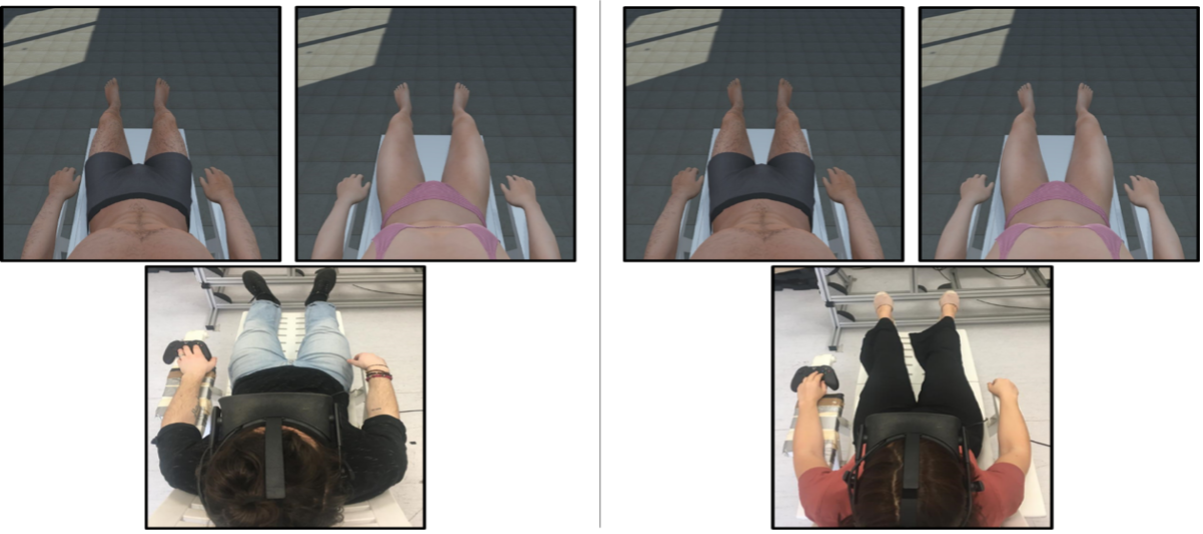
Experimental set-up used in Mello et al. (2022b) for testing the effect of body swap on social and intimate touch.
Other studies have explored how gendered embodiment modulates empathic and moral behavior. Male participants who embodied a lone female avatar being harassed in a virtual bar were subsequently more likely to resist authority in a Milgram-style obedience task (Banakou et al., 2020). Similarly, male perpetrators of domestic violence who embodied a female victim in a virtual abuse scenario became better at recognizing fearful female facial expressions and showed less bias in interpreting them as happy (Seinfeld et al., 2018). These findings suggest that virtual gender transformation may promote empathy and behavioral change, providing theoretical support for emerging interventions in rehabilitation and training contexts (Johnston et al., 2023; Johnston et al., 2023). One of the most conceptually intriguing extensions of the Proteus effect is the embodiment of avatars resembling iconic figures. Because these figures are strongly linked to traits like intelligence, creativity, or authority, embodying them can trigger a self-association with those same qualities. In one study, participants who alternated between an avatar resembling themselves and one representing Sigmund Freud reported better emotional insight and more satisfactory personal advice when speaking from the Freud avatar, compared to the self-avatar (Osimo et al., 2015). Embodying culturally revered intellectuals like Leonardo da Vinci (Gorisse et al., 2023) or Albert Einstein (Banakou et al., 2018) has also been shown to enhance divergent thinking and cognitive performance, though findings are not always consistent. Kocur et al. (2020b), for instance, failed to replicate Einstein-related cognitive gains in a collaborative IVR setting, suggesting that task structure, duration, and social presence may moderate the effect. More recently, the use of avatars modeled after political or religious figures has yielded equally fascinating results. In the study, the more participants associated Angela Merkel with leadership traits and evaluated her positively, the more they identified with those same traits after the embodiment experience. However, embodying Merkel was not significantly more effective than embodying a control avatar in producing these effects (Frisanco et al., 2025). Conversely, participants who embodied Kim Kardashian paradoxically showed a decrease in narcissistic attitudes–possibly due to distancing from perceived undesirable traits (McCain et al., 2018). Embodying the Christian God, represented in anthropomorphic form, led participants to overestimate their physical abilities and show dampened freezing responses to threats (Frisanco et al., 2022, Figure 3).
Figure 3
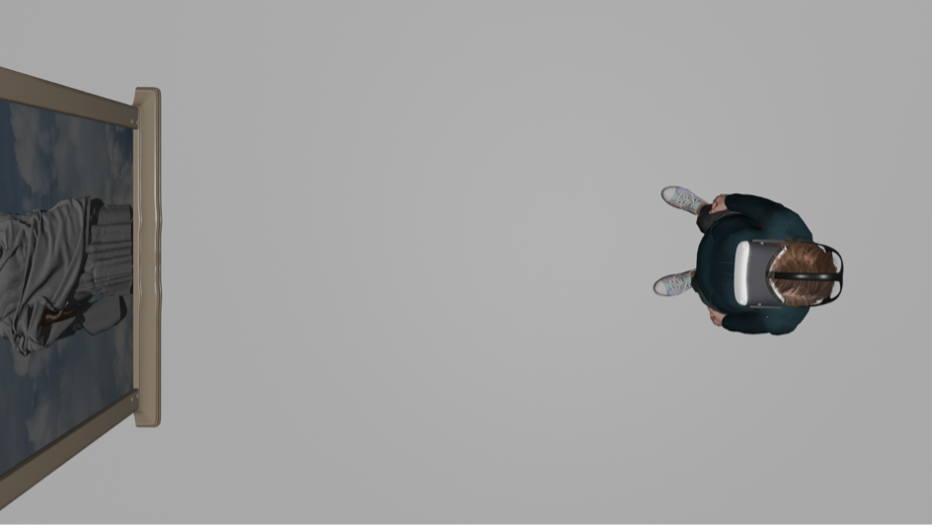
An IVR user observes their avatar's reflection as a divine entity, exemplifying the Proteus Effect–the phenomenon whereby individuals' behaviors, attitudes, and self-concept are influenced by the characteristics of their embodied virtual representation. Inspired by Frisanco et al., 2022. Created using Blender (https://www.blender.org/).
Altogether, mounting evidence shows that manipulating bodily features can spark profound shifts in how individuals perceive themselves and behave. And while IVR has become a powerful tool for studying body representation and bodily self-consciousness, it is equally true that–within these immersive environments–the body itself is beginning to reclaim a central role, not just as an object of study, but as the very medium through which we exist, relate, and interact in virtual space.
Bodies, peripersonal spaces, and virtual social interactions
In immersive virtual environments, the body takes on an increasingly central role–not just as a tool for navigating that world, but as a key mediator of social experience (Fig.4).
Figure 4
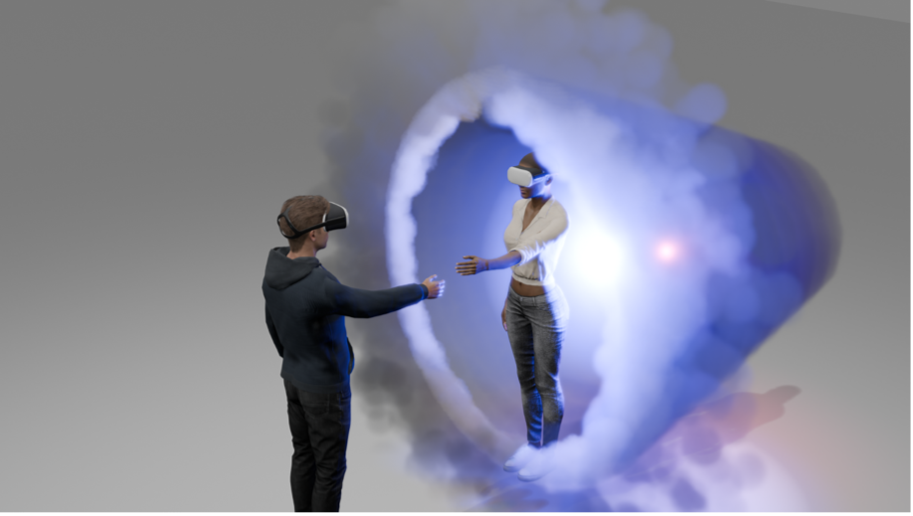
This depiction illustrates how IVR fosters embodied social presence by merging separate virtual spaces into a shared perceptual environment, enhancing place illusion. Through motion tracking and avatar embodiment, users express gestures–such as affective touch–that can support social connectedness despite physical separation. Created using Blender (https://www.blender.org/).
Virtual bodies influence how users perceive others, manage interpersonal distance, and participate in dynamic, interactive exchanges. These social and spatial dynamics are grounded in neurocognitive mechanisms that encode the space around the body–most notably, the peripersonal space (Serino, 2019). Peripersonal space refers to the area immediately surrounding the body where interactions with nearby objects occur and actions become behaviorally relevant. It guides movements aimed at initiating or avoiding contact with external stimuli (Bufacchi & Iannetti, 2018). This space is encoded by multisensory neurons in a fronto-parietal network, which combine touch on specific body parts with visual and auditory signals from nearby objects (Pellegrino & Làdavas, 2015). Importantly, peripersonal space is not fixed; it is a flexible boundary that is continuously shaped by learning and experience (Longo & Serino, 2012) and serves both defensive and appetitive functions (Serino, 2019). In immersive virtual environments, peripersonal space operates in a manner closely resembling its function in the real world (Iachini et al., 2016; Serino et al., 2018): users show enhanced detection of visual and auditory stimuli when they approach the avatar (Seinfeld et al., 2022), and the boundaries of peripersonalspace are more clearly defined when the virtual context is rich and multimodal (Serino et al., 2018). Crucially, the bodily self-consciousness elicited by the avatar modulates the users' behavioral and physiological responses to events occurring within peripersonal space–intensifying reactions to stimuli such as an approaching threat or a caress, as if these were directed at the biological body (Fusaro et al., 2016; González-Franco et al., 2014; Lisi et al., 2024; Nicolardi et al., 2025; Sun et al., 2024; Verga et al., 2025). These bodily responses become even more complex during interpersonal encounters, as the social identity of another avatar–its gender, attractiveness, or group membership–can modulate the way users perceive virtual touch. Users report different levels of pleasantness, appropriateness, and even erogeneity depending on who touches them, where the touch occurs, and their own sexual orientation (Fusaro et al., 2021), paralleling findings from real-life touch studies (Chatel-Goldman et al., 2014; Suvilehto et al., 2015). Similarly, studies have shown that individuals regulate their distance from other avatars in ways similar to real-world interactions (Iachini et al., 2016), suggesting that the embodiment of an avatar automatically activates a safety buffer zone that adapts to situational cues and personal characteristics. Supporting the notion that attitudes and social evaluations are grounded in bodily interactions with the (virtual) environment (Meier et al., 2012), human-avatar interpersonal distance can be indeed modulated by factors such as the avatar's attractiveness (Welsch et al., 2020), as well as users' implicit biases and prejudices, including those related to race (Dotsch & Wigboldus, 2008), sexual orientation (Fusaro et al., 2021), and health status (Toppenberg et al., 2015). The safety zone between avatars is also sensitive to nonverbal cues–such as eye contact (Bailenson et al., 2001) and body posture (Mello et al., 2022)–which combine to regulate levels of comfort, intimacy, or avoidance. As shown by Wieser et al. (Wieser et al., 2010), this continuous adjustment has measurable effects on users' physiological responses, reinforcing the notion that bodily self-consciousness and spatial representation are key components of virtual social cognition. These findings become particularly salient in large-scale social immersive platforms–such as VRChat or Meta Horizon Worlds– where embodied virtual social interactions can occur at scale (Hennig-Thurau et al., 2023). While often analyzed through technological or sociological lenses, these platforms can also be understood as shared spaces of bodily representation, where the avatar's use of space directly informs the dynamics of social interaction (McVeigh-Schultz et al., 2018). These platforms offer a glimpse into what has been envisioned as the metaverse, namely "a massively scaled and interoperable network of real-time rendered 3D virtual worlds that can be experienced synchronously and persistently by an effectively unlimited number of users with an individual sense of presence, and with continuity of data, such as identity, history, entitlements, objects, communications, and payments" (Ball, 2022). Although this concept has gained traction in both popular culture and academic discourse–originally inspired by science fiction (Stephenson, 1994)–its full realization remains limited. While the ability to host real-time synchronous exchanges between remote users involving multiple senses is already present in various social IVR platforms (Liu & Steed, 2021; Osborne et al., 2023), the metaverse as envisioned by Ball (2022) and many others (Abilkaiyrkyzy et al., 2023; Zhang et al., 2024) is still far from fully realized, due to persistent challenges related to interoperability, scalability, and accessibility (Steed, 2024). Indeed, inconsistencies can arise when users access virtual spaces through different devices varying in their capabilities (for example, rendering or tracking capabilities), potentially leading to restricted participation in certain experiences within the metaverse, creating disparities in user engagement (Abilkaiyrkyzy et al., 2023). Moreover, cost and accessibility can limit the availability of certain technologies, such as high-end haptics and somatosensory feedback, which limits the bodily experiences in the metaverse (Wang et al., 2023). Despite their limitations, social IVR platforms can represent an alternative environment for satisfying the need for social contact when real contact is not possible (Sykownik et al., 2021). Similarly, these platforms can foster participation for those who cannot leave their homes due to illness or disability (Farah & Ramadan, 2024), providing opportunities for participation for marginalized groups (Hatada et al., 2024), ultimately contributing to an inclusive society (Sakamoto & Ono, 2024). In this context, careful design aspects such as locomotion techniques (Luca et al., 2021), and the inclusion of wheelchairs, prostheses, running blades, various body types and sizes in avatar customization promote greater accessibility and possibility to express for people with disability (Farah & Ramadan, 2024). While immersive virtual environments offer promising avenues for social interaction, it also raise important concerns about user privacy and security, particularly due to the embodied nature of virtual experience (Massari et al., 2024). Unlike traditional digital environments, threats in immersive platforms can target the user's virtual self–compromising identity, bodily representation, and personal data. For example, avatars may inadvertently reveal biometric or behavioral information, enabling user identification or cloning (Eltanbouly et al., 2024; Falchuk et al., 2018). Some platforms have begun to implement privacy-oriented design features, such as avatar blurring or customizable anonymity settings (Wang et al., 2021; Nair et al., 2023). However, these solutions often interfere with the sense of presence and realism that underpin bodily self-consciousness in IVR (Eltanbouly et al., 2024). Balancing embodiment with protection thus remains a critical challenge for future immersive environments (Zytko & Chan, 2023). Beyond risks to privacy and identity, the embodied nature of the metaverse introduces specific vulnerabilities tied to how users experience their virtual bodies. Unlike traditional digital environments–where harassment is primarily verbal or visual–immersive platforms allow for direct intrusions into the avatar's personal space, often experienced as violations of one's own body (Dwivedi et al., 2022; Homayouni & Zytko, 2023). Qualitative accounts of virtual harassment (Blackwell et al., 2019; Massari et al., 2024; Wiederhold, 2022) are supported by neuroscientific findings showing that people regulate interpersonal distance similarly across real and virtual contexts (Bailenson et al., 2001; Iachini et al., 2016; Fusaro et al., 2021), and display defensive responses when virtual threats encroach upon the space surrounding their embodied avatar (González-Franco et al., 2014; Lisi et al., 2024; Nicolardi et al., 2025). These reactions reflect the fact that, once incorporated into bodily self-consciousness, the avatar is no longer merely a visual proxy but part of the user's experienced body. To prevent such intrusions, many platforms have implemented personal space "bubbles"–customizable protective zones that cause other avatars to become invisible when crossed (Young, 2023). As virtual embodiment becomes more central to digital interaction, designing respectful spatial boundaries is not only a matter of user safety, but essential to avoid triggering bodily responses and psychological discomfort typically associated with real-world violations (McIntosh & Allen, 2024).
Taken together, these findings highlight that the body remains a foundational element even within highly social and large-scale immersive virtual environments. Whether regulating interpersonal distance, experiencing virtual touch, engaging in conversation, or reacting to intrusion, users rely on their embodied avatar as the primary interface for perceiving and enacting social interaction. As immersive technologies continue to evolve, it is the virtual body–its spatial boundaries, expressive affordances, and vulnerability to violation–that will remain the central locus of presence, perception, and meaning in social IVR.
Conclusions and open questions
In the metaverse, physical experiences can be replicated- or even transcended- through multisensory congruencies enabled by HMDs, haptic feedback systems, and motion tracking. These tools create a feeling of embodiment within digital spaces, where users feel like they physically inhabit their avatars, interact with objects, and engage with other users. This shift challenges traditional notions of the body by enabling people to experience physical sensations in an entirely digital world. How will these emerging embodied experiences in the metaverse affect our understanding of the self and our relationship with our physical bodies? Crucially, users in the metaverse have the ability to create and customize avatars–digital representations of themselves that may or may not resemble their physical bodies. This opens up new possibilities for self-expression, where individuals can experiment with different gender identities, body types, and aesthetic preferences. The freedom to transcend physical limitations in the metaverse can be liberating, but it also raises issues around authenticity, identity fragmentation, and social dynamics. How will the ability to freely customize our virtual bodies influence our real-world self-perception and identity? Moreover, illusory embodiment of avatars is no longer a private, individual phenomenon confined to laboratory settings. Virtual bodies operate in social environments, where shared spaces and interactions can mirror real-world dynamics. Bodily expressions and social cues (like eye contact, gestures, and body language) are mediated through digital systems. As metaverse communities grow, these new forms of embodied socialization will develop their own norms and etiquettes. Virtual body language, proximity, and digital touch will create unique forms of social interaction, potentially reshaping how we perceive and engage in physical encounters. What new social norms and etiquettes will emerge as we interact with others through virtual embodiment, and how will they influence real-world social behavior? In this context, the body becomes a medium for labor, play, and sociality, as motion-tracked IVR experiences engage physical movement for digital tasks, workouts, or even virtual sports, transforming the body into an active participant in digital worlds. The gamification of movement–whether for leisure or work–presents new challenges around accessibility, fatigue, and the blending of physical labor with virtual economies. How will the increasing use of physical body movements in virtual spaces affect the future of work, leisure, and human interaction in digital economies? Prolonged immersion in digital environments also raises concerns about the physical and mental health, including eye strain, motion sickness, and detachment from offline life. On the other hand, digital worlds also offer new avenues for wellness, such as IVR-based therapy, meditation, and fitness. How can society address the health implications of prolonged engagement with the metaverse, and how might technology evolve to promote well-being in virtual spaces?
Ultimately, the evolving relationship between the body and the metaverse is deeply tied to broader societal trends in digital culture, identity, and technology. The concept of "presence" becomes central, as digital worlds offer a sense of being there that can rival physical presence. This leads to a redefinition of "presence" itself, where a person can "be" somewhere without physically being there. As virtual worlds become more immersive and integrated into daily life, our bodies, minds, and relationships will face new challenges and opportunities in navigating these dual realities. The key challenge will be to balance the benefits of digital embodiment with the need to remain connected to our physical selves and communities.
In summary, the evolving landscape of virtual embodiment invites a multidisciplinary inquiry into how bodily experience is constructed, extended, and transformed across physical and virtual realms. As we continue to explore the boundaries of presence, the body remains a central and dynamic site of negotiation- between nature and technology, self and society, perception and identity.
Acknowledgements
This paper was written during a 1-month residence of the first author at the Paris Institute for Advanced Study under the "Paris IAS Ideas" program.